
Where to Swim in Nafplio: Beaches, Coves and the Spots You Can Only Reach by Boat
In summer the water is the main reason to be in Nafplio, and most visitors only see half of it. The Argolic Gulf is sheltered and calm, and it stays warm enough to swim from late spring into October. But the coast splits in two. There are the beaches you can walk or drive to, which everyone finds. Then there are the coves with no road, no parking and no crowd, which almost no one does.
This is a guide to both, from people who are on this water every day.
The beaches you can reach on foot or by car:
These are the easy, road-accessible options. Good for a quick dip, a family beach day, or an afternoon off the boat.
Arvanitia is the town swim. It’s a small pebble cove below the Palamidi and Akronafplia fortresses, about a ten-minute walk from the Old Town along the Arvanitia promenade (the sea-wall path locals call the Round of Arvanitia). It has a beach bar, sunbeds and clear water. The bottom drops off fast, so it suits adults and older kids more than toddlers. Come early or late in the day. By midday in August it’s packed.
Karathona is the closest proper sandy beach. It’s a wide, shallow family bay about a ten-minute drive south, or a 3 km walk on the gravel path past Arvanitia. Real sand, turquoise shallows that are safe for children, and natural shade from eucalyptus and palm trees, which is harder to find on a Greek beach than you’d expect. Blue Flag water.
Neraki sits between the two. It’s a small, unorganised cove for people who want fewer sunbeds and a bit of quiet. No facilities, so bring your own water and shade.
Tolo (Psili Ammos) is about 11 km out, the busy resort beach with a long sandy shore, calm water, tavernas and watersports. Right next to it, Ancient Asini lets you swim beside a 5,000-year-old archaeological site, which you don’t get at most beaches.
Kondyli (St. Nicholas), a bit further along the coast, is one many locals rate as the most beautiful in Argolida. The water is exceptionally clean and gets deep within a few steps of the shore, which is part of why it stays so clear. Popular with the beach-bar crowd.
Further south there’s Plaka Drepanou, with a long sandy coastline and campsites, and the fishing village of Vivari, worth the trip as much for the fish tavernas as the swim.
What the road can’t reach: swimming the gulf by boat
Every beach above has one thing in common: a car can stop there. That’s the whole land map of Nafplio’s coast, and every other guide online lists the same handful of names.
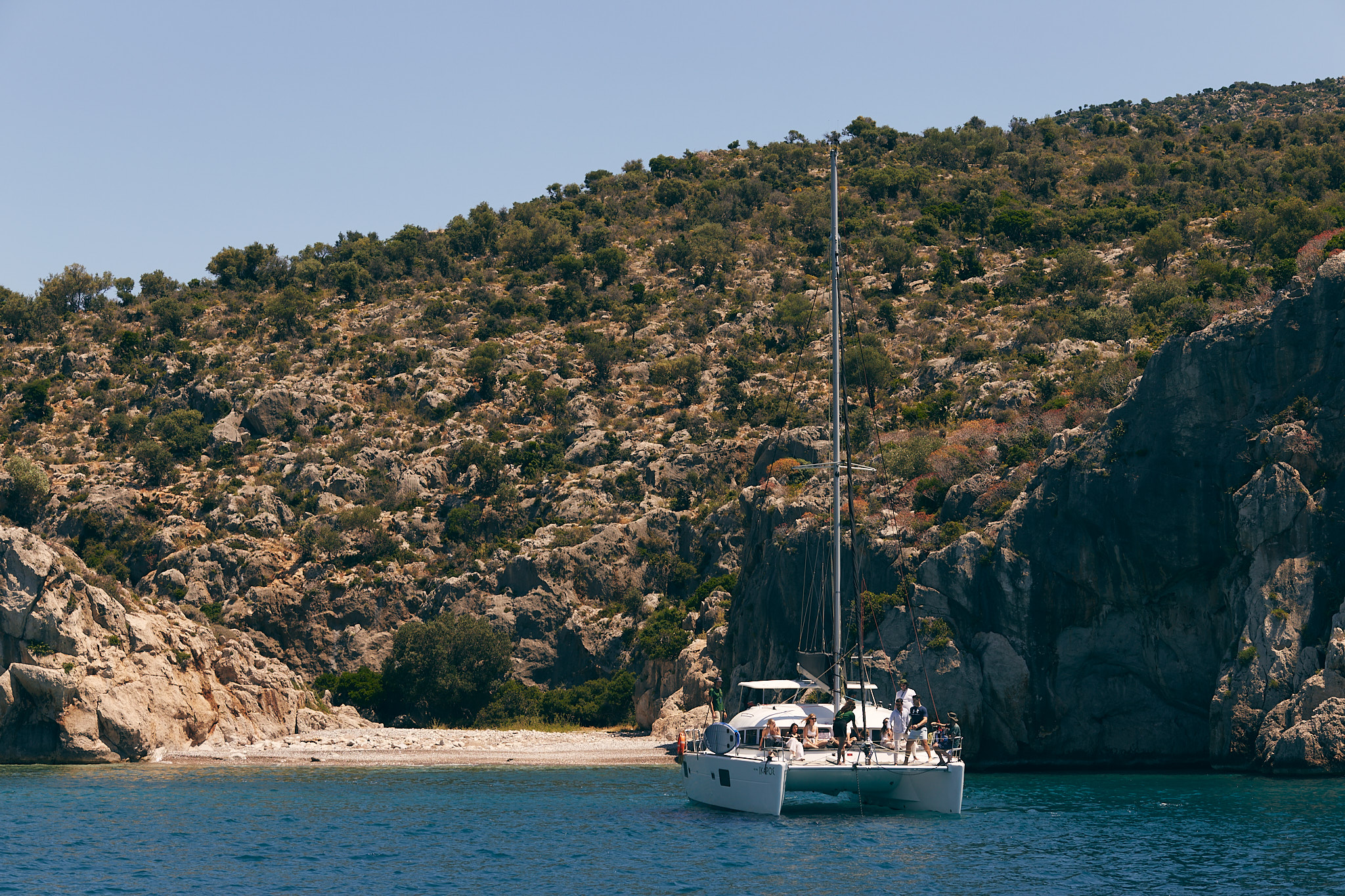
The gulf is much bigger than its parking lots. The best swimming is along the parts of the coast with no road at all. Sheltered bays where the water turns from turquoise to deep blue, quiet coves you’ll often have to yourself, and clear spots for snorkelling far from the beach-bar music. You can’t walk or drive to any of it. You get there by boat, which is how this coast was meant to be seen in the first place.
That’s what a day on the boat is for. On a Nafplio4Sail cruise we anchor at two swimming stops, picked for calm, clear, quiet water, with snorkelling gear and paddleboards on board so the swim becomes the point of the day and not just a quick dip. You sail out past the Bourtzi fortress islet, drop anchor somewhere no road reaches, and swim in water as clear as anything you’ll find on a Greek island, without the ferry.
The two we anchor at most are Romvi and Daskaleio, a pair of islets across the sheltered bay from Tolo. Romvi is the larger one, green and covered in pine, with water that turns almost emerald in the narrow channel between the island and the shore. You can only get there by boat. The swimming off its quieter back side is some of the clearest in the gulf, and there are old stone ruins half-hidden in the pines if you feel like going ashore. Daskaleio sits just behind it, smaller and quieter, with a little chapel and a shallow, calm cove that’s made for a slow snorkel before lunch. No road reaches either one, so most days it’s just us out there.
It’s the part of the coast most visitors never see.
Practical tips for swimming around Nafplio
Best months: The sea is warm and swimmable from roughly late May through late October. July and August are peak, with warm water and the biggest crowds on the town beaches.
Water shoes help. Rocky and pebbly entries like Arvanitia can hide sea urchins. A cheap pair saves the day.
Jellyfish occasionally drift in during the hottest weeks. Usually harmless, but worth a glance before you jump.
Water quality is excellent. Karathona, Tolo and Kondyli all hold Blue Flag status, and the sheltered gulf keeps the water calm and clean.
Shade is scarce on most beaches except Karathona. Bring a hat and sunscreen. The midday Peloponnese sun is no joke.
Frequently asked questions
Can you swim right in Nafplio town? Yes. Arvanitia beach is a ten-minute walk from the Old Town, a pebble cove under the fortress with a beach bar and clear water. It’s the most convenient swim in Nafplio, best in the morning or late afternoon.
What’s the best sandy beach near Nafplio? Karathona is the closest and most family-friendly: a wide sandy bay about a ten-minute drive from town, with shallow water, natural tree shade and Blue Flag water quality. Tolo, 11 km away, is the larger resort-style option.
Where is the clearest water for swimming near Nafplio? The sheltered Argolic Gulf is clear and calm throughout. Kondyli is the standout among road-accessible beaches, but the clearest, quietest water is at the coves along the coast that you can only reach by boat.
Is the water warm enough to swim? The sea around Nafplio is comfortably warm for swimming from late spring through early autumn, roughly late May to early October, thanks to the sheltered, shallow gulf.
How do you reach the swimming spots you can’t drive to? By boat. A day cruise from Nafplio anchors at quiet coves and clear-water bays with no road access, where you can swim, snorkel and paddleboard away from the crowds.
Want to swim where the road doesn’t go? See our daily sailing and catamaran cruises from Nafplio.